Writing SaaS hero copy that converts browsers into signups
 Alipio Gabriel
·
·
5 min read
Alipio Gabriel
·
·
5 min read
Your SaaS hero section is doing a job interview every time someone lands on your page. Most heroes fail it in the first sentence because they lead with what the product is rather than what the visitor gets.
We build a lot of custom web apps and marketing sites for SaaS founders, and the pattern is almost always the same: the product itself is solid, the positioning is fuzzy, and the hero copy is the place where that fuzziness costs real money. Let’s fix that.
The structure every strong SaaS hero shares
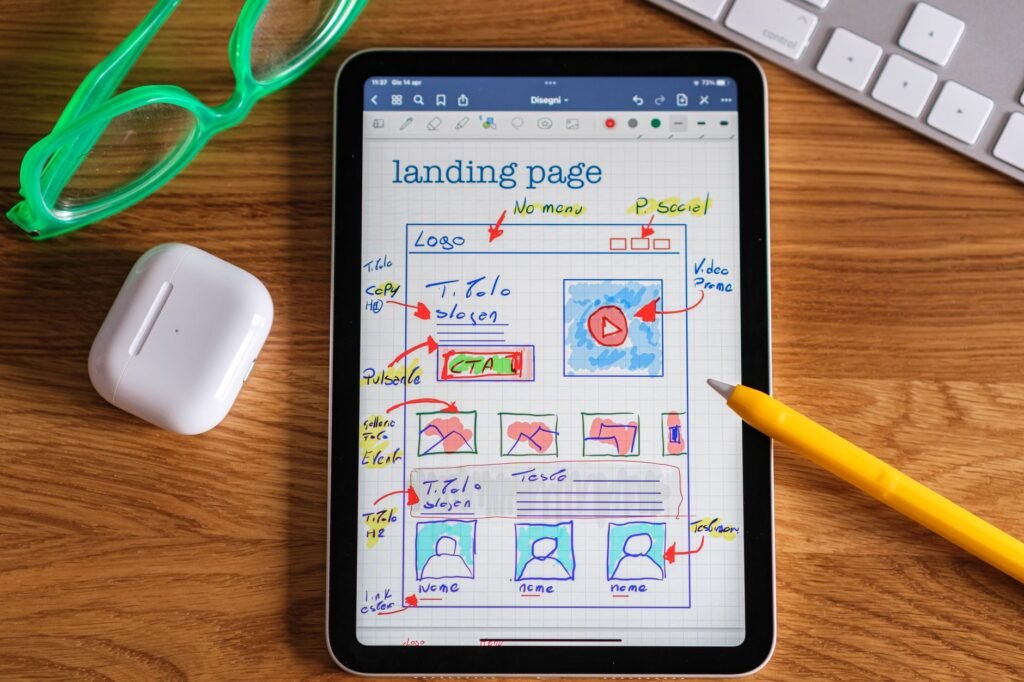
A hero section has four moving parts: the headline, the subheadline, the primary CTA, and social proof (logos, a stat, a short testimonial). Each one has exactly one job.
The headline names the outcome your best customer wants. Not the feature. Not the category. The outcome. “Ship analytics dashboards without hiring a data engineer” is a headline. “The all-in-one analytics platform” is a description of a drawer organizer. If your headline could also describe your two closest competitors, it is not doing its job.
The subheadline is where you earn specificity. One or two sentences that explain who this is for, what it does, and what makes it different. Think of it as the sentence you’d say right after the headline if you were pitching a smart friend who hadn’t heard of you. Concrete nouns. Real numbers when you have them.
Why most SaaS founders write weak headlines
Founders tend to write hero copy the way they’d write a pitch deck. They reach for impressive-sounding language because they’re proud of what they built, and pride is not a copywriting strategy. Words like “seamless”, “powerful”, “next-generation”, and “robust” have been used so many times that readers simply do not register them anymore.
The other trap is writing for the wrong reader. A lot of SaaS hero copy is written for investors or peers in the industry, not for the slightly-skeptical, time-short buyer who arrived from a Google ad. That buyer needs clarity before they need anything else. Clarity converts. Cleverness can wait until the second paragraph.
When we do SEO and technical audits for SaaS sites, one of the first things we check is whether the page’s H1 and meta title actually match what a buyer would search. They often don’t. The site ranks for the founder’s preferred terminology, not the customer’s words. Same problem, different channel.
How long should SaaS hero copy be?
Short. The headline should rarely exceed ten words. The subheadline can run two to three sentences, but every word needs to pull weight. The CTA button text should be a verb and an outcome, not “Submit” or “Get Started” and definitely not a full sentence.
“Start free” and “See it in action” both work because they are specific about what happens when you click. “Get started today” is vague enough to be meaningless. One extra word of specificity on a button can move conversion rates by a measurable margin, and that is not a claim we’re making up: it’s been documented repeatedly by teams at companies like Unbounce and HubSpot in their published CRO research.
A quick checklist before you publish your hero
- Read the headline aloud. If it sounds like a tagline from a consulting firm, rewrite it around a concrete customer outcome.
- Cover up your logo and ask: could this hero belong to a competitor? If yes, you need a sharper differentiator.
- Check that your CTA button text describes what happens after the click, not the click itself.
- Make sure a piece of social proof (a recognizable logo, a user count, a short quote) sits within the hero or immediately below it.
- Test the page at mobile widths. Hero copy that breaks across lines in an awkward place can change the entire read.
Copy and design have to be written at the same time
This is the thing that trips up a lot of SaaS builds. Copy gets written in a Google Doc, handed to a designer, and then jammed into whatever space the layout has left. That is backwards. The copy should inform the layout from the start, not compete with it at the end.
When we take on a SaaS marketing site, whether that’s a custom WordPress build in Figma and Gutenberg or a fully custom stack, we push back on founders who want to finalize the design before the copy is settled. The hierarchy of the page, the visual weight, the breathing room around the headline: all of that depends on knowing what the words are going to say. Skipping that step produces hero sections that look polished in a mockup and land flat in the real world.
If your hero section is bleeding traffic without converting it, we’re glad to take a look. Book a free 30-minute call and we’ll tell you honestly what we see.